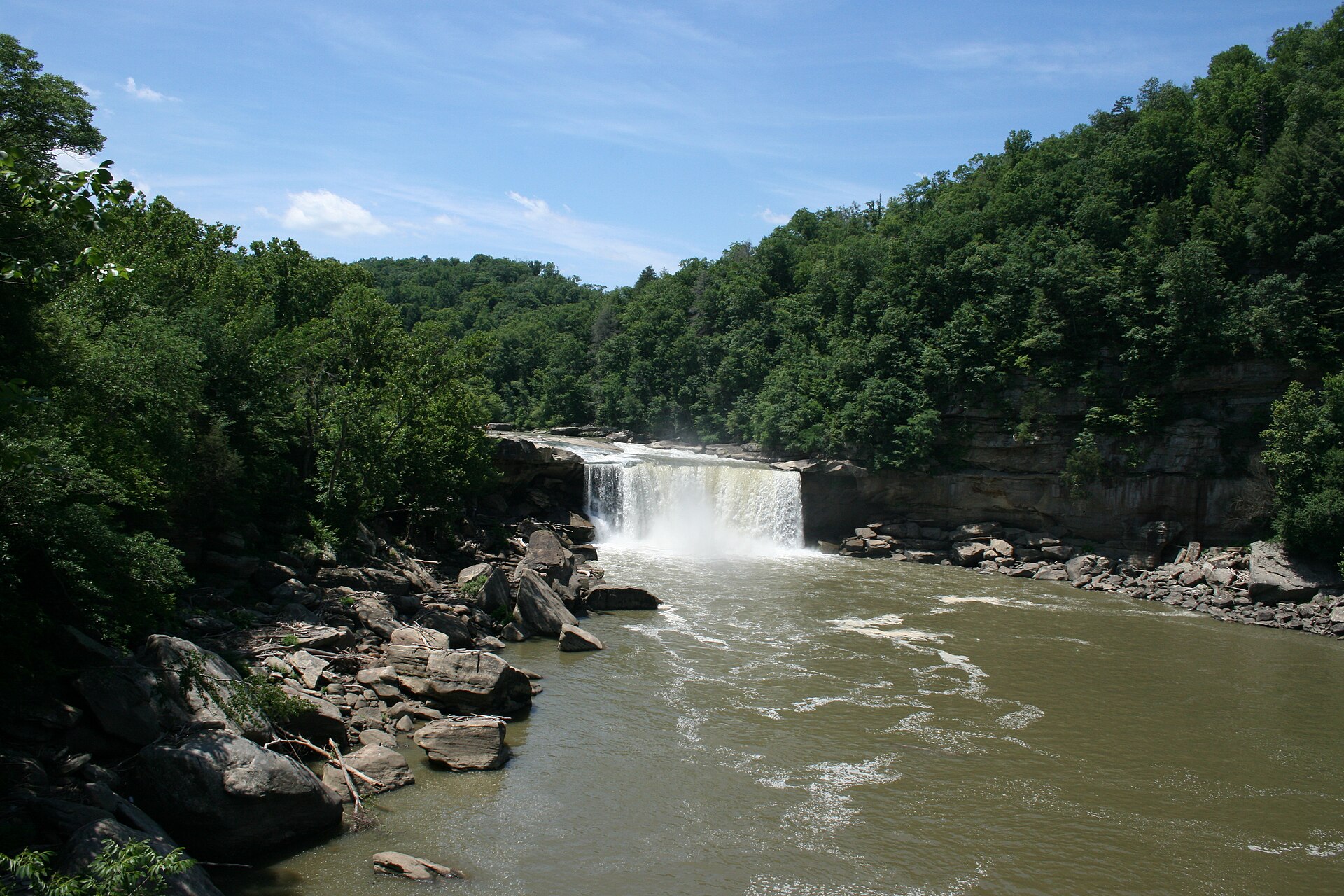
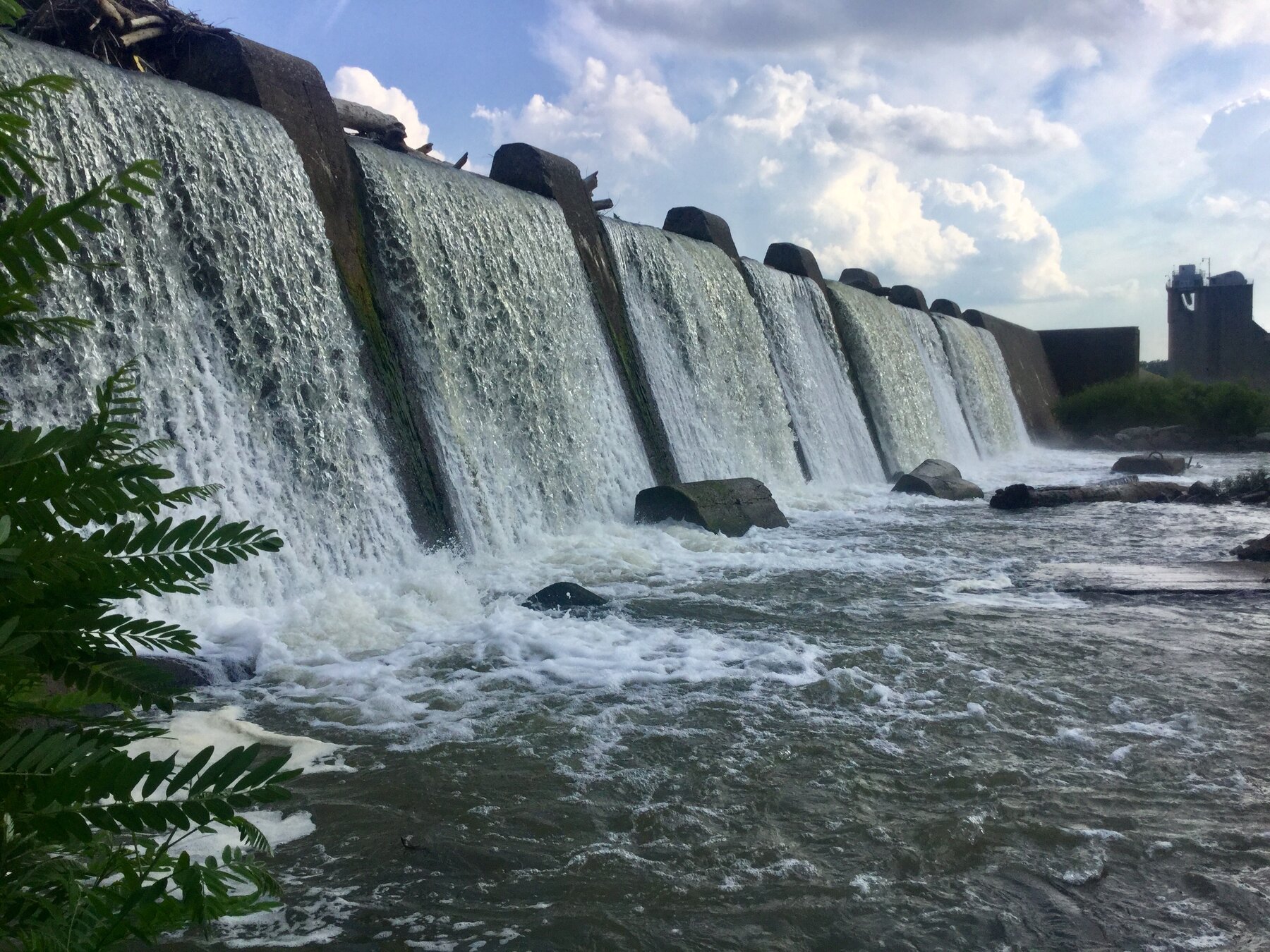
Not a plunge waterfall but exposed Devonian fossil beds and rapids on the Ohio River, best seen at low water.
Despite its name, Falls of the Ohio is not a plunge waterfall. It centers on one of the largest exposed Devonian-age fossil beds in the world, along with rocky rapids in the Ohio River that once challenged early river traffic. The fossil beds sit within Falls of the Ohio State Park in Clarksville, Indiana, directly across the river from Louisville and Jefferson County, Kentucky, and are most visible from August through October, when river levels run lowest.
Access centers on the park's Interpretive Center, open Monday through Saturday 9 a.m. to 5 p.m. and Sunday 1 to 5 p.m., with admission of $9 for ages 12 and up, $7 for ages 5 to 11, and a separate $2 parking fee. Removing fossils from the beds or riverbank is prohibited, though the park maintains designated collecting piles of already-quarried rock near the Interpretive Center lot. No alerts were posted on the park's page at our check, but river levels and bed exposure change quickly, so confirm current conditions before a visit.
Know before you go
Falls of the Ohio State Park Interpretive Center, 201 West Riverside Drive, Clarksville, IN, directly across the Ohio River from Louisville/Jefferson County, KY.
Fossil beds and rapids are most exposed and accessible August through October, when river levels are lowest, per the park.
Short riverside access to the fossil beds near the Interpretive Center; no long hiking trail is required to view them.
Interpretive Center admission: $9 ages 12+, $7 ages 5-11, free under 5; separate $2 parking fee (checked 2026-10-12).
Not verified for the riverside fossil beds; check with the park for accessible viewing options.
2026-10-12. Conditions and requirements can change; confirm with the land manager before travelling.
Sources & further reading
This is a researched visitor guide, not a claim that our editors have personally visited. Trail conditions, permits, and access can change.